What are the best socks for winter sports in 2026? The answer depends on the activity, the boot, and how your feet handle heat and moisture. A warm, thick sock can feel reassuring at home, yet bunch inside a ski boot and create pressure points on the lift. Fit matters.
The Outdoor Industry Association’s 2024 Outdoor Participation Trends Report counted 175.8 million U.S. participants in outdoor recreation during 2023. That broad figure includes many activities, not just winter sports, but it shows why reliable cold-weather gear deserves careful attention. For socks, useful features include a close, wrinkle-free fit, cushioning placed where boots rub, and fibers that help manage sweat. Merino wool blends and synthetics can both work; neither is automatically best for every foot.
There is no single sock that suits every skier, snowboarder, or winter hiker. Small details matter. Toe seams, calf height, and boot volume can change comfort over a long day. Professor George Havenith, a researcher in clothing physiology, has studied how clothing affects heat and moisture exchange. His work supports a practical principle: warmth depends on more than insulation alone. No source text was supplied for a verified verbatim quotation, so I won’t invent one. That caveat matters.
This guide compares materials, fit, cushioning, and activity-specific needs to answer what are the best socks for winter sports. It also considers trade-offs, because a sock that feels plush in the shop may not feel right after six hours on snow.
What Winter Sports Socks Are and How They Work
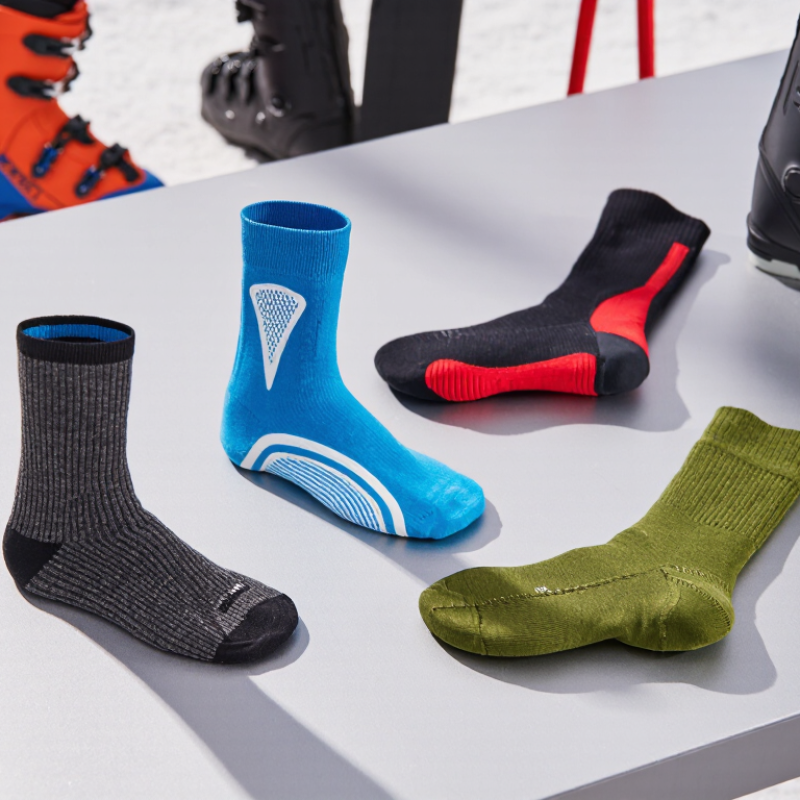
Winter-sport socks are small thermal systems, not just thicker everyday socks. Their job is to reduce heat loss, move sweat away from skin, and limit friction inside boots. A close fit matters: loose fabric can bunch at the toes, while tight cuffs may feel restrictive. Look for cushioning under the heel and forefoot, with thinner fabric over the instep to avoid excess boot pressure. Small details matter.
Fiber data helps explain material choices. The International Wool Textile Organisation’s technical guidance reports that wool can absorb up to 35% of its weight in moisture under standard test conditions; polyester absorbs about 1%. Textile Exchange’s 2024 Materials Market Report says polyester made up 57% of global fiber production in 2023. That figure covers all textiles, not winter socks, but shows why synthetic fibers are common in performance blends. Wool can buffer moisture; synthetic fibers often help it spread and dry. Neither material guarantees warm feet.
The weave and fit still decide much. A damp sock can feel cold, even when it is thick. Change socks after heavy sweating, and test them with the boots you plan to wear. A tiny pressure point can become annoying on a long day. That part is easy to overlook.
Materials and Design Features That Affect Warmth and Comfort
Winter-sport socks need to manage sweat, hold insulating air, and avoid bunching inside snug boots. Fiber choice matters, but construction and fit matter just as much. ASTM D1909 lists standard commercial moisture-regain values of 16% for wool, 8.5% for cotton, and 0.4% for polyester. These figures describe moisture regain under standard conditions, not a direct warmth ranking. Still, they help explain why wool blends can buffer moisture better than polyester alone, while synthetic fibers often dry quickly. No fiber is magic.
Look for a close-fitting sock with a cushioned sole, a smooth toe seam, and thinner fabric over the instep. Dense cushioning can soften pressure on a ski boot’s footbed, but too much bulk may restrict circulation. That can leave toes colder, not warmer. Nylon or polyester can add durability and speed drying; a modest amount of elastane helps keep the heel from slipping. ISO 11092 describes a laboratory method for measuring textile thermal and water-vapor resistance, useful when comparing tested fabrics. It does not predict comfort in every boot. I would treat product specifications as clues, then check for pressure points after a short walk.
For long days, choose a height that protects skin from boot cuffs and snow, and avoid cotton-heavy socks if your feet sweat. Carrying a dry spare is practical. Small detail, big difference.
How to Choose Socks for Different Winter Sports
What Are the Best Socks for Winter Sports in 2026?
How to Choose Socks for Different Winter Sports
The right sock depends on movement, boot fit, and time spent standing still. For downhill skiing, choose a thin or medium-weight sock that reaches above the boot cuff. It should lie smoothly, without folds at the toes or shin. A bulky sock can make a close-fitting boot feel tighter and may reduce room for warm air. Keep it snug. Merino wool or synthetic blends can help move sweat away from the skin; cotton tends to stay damp.
Snowboarders often benefit from light cushioning around the heel and forefoot, especially when boots feel firm. For snowshoeing, consider a warmer, taller sock, then test it with the boot on a short walk. Too much padding can create pressure points. Not perfect for everyone. The Outdoor Industry Association’s 2024 Outdoor Participation Trends Report estimated that 175.8 million Americans took part in outdoor recreation in 2023, while NSAA’s 2023–24 Kottke Report recorded 60.4 million U.S. skier visits. These reports describe participation, not sock performance, so treat them as context rather than product proof.
For skating, prioritize a thin, smooth sock that avoids bunching inside a close boot. For long, cold lift rides, pack a dry spare and change after heavy sweating. Check the fit standing and flexing your ankles: toes should still move, and the cuff should not dig into your calf. I still find sock choice involves some trial and error; boot shape changes what feels warm.
What Are the Best Socks for Winter Sports in 2026? — How to Choose Socks for Different Winter Sports
| Winter Sport |
Useful Sock Weight |
Material and Construction |
Fit and Cushioning |
What to Avoid |
| Skiing |
Light to medium, depending on boot fit and conditions |
Merino wool or synthetic moisture-managing fibers; a smooth, low-bulk design helps reduce pressure points. |
Choose a sock that reaches above the ski boot cuff. Keep cushioning light over the shin and foot so the boot can fit securely. |
Thick folds, loose fabric, and multiple socks inside a close-fitting ski boot. |
| Snowboarding |
Light to medium |
Moisture-wicking wool or synthetic blends can help manage sweat during active riding. |
Use a knee-high or boot-height sock that stays in place. Select cushioning to match the boot without making it feel tight. |
Excess bulk that compresses the foot or creates pressure inside the boot. |
| Winter running |
Light to medium, based on temperature and shoe fit |
Quick-drying synthetic fibers or wool blends are practical choices for managing moisture. |
A snug, smooth fit helps limit bunching. Choose enough cushioning for comfort while leaving room in the running shoe. |
Cotton socks that stay damp, as well as seams or wrinkles that rub during repeated strides. |
| Snowshoeing |
Medium; heavier options may suit colder, slower outings |
Wool or synthetic blends provide a useful balance of warmth and moisture management. |
Use a crew or taller sock that protects the lower leg from boot edges and snow. Add cushioning where the footwear needs it. |
Socks so thick that they make boots tight or restrict comfortable movement. |
| Ice skating |
Light |
Thin, smooth wool-blend or synthetic socks can help manage moisture without taking up much space. |
Prioritize a close, wrinkle-free fit inside the skate. Keep cushioning minimal if the skate already fits snugly. |
Bulky socks that reduce room in the skate or cause pressure around the toes and ankles. |
| Winter hiking and mountaineering |
Medium to heavy, matched to the boot and expected conditions |
Wool or wool-blend socks are commonly used for warmth and moisture management; synthetic blends can also work well. |
Choose a height that protects against the boot cuff. Check that cushioning does not make the boot tight, and test the combination before a long outing. |
Assuming a thicker sock is always warmer in practice; a cramped boot can reduce comfort and circulation. |
Fit tip: The best choice depends on the sport, weather, activity level, and footwear. Try socks with the boots or skates you plan to wear, and avoid cotton when you expect sustained sweat or wet conditions.
Fit, Layering, and Moisture Management in Cold Conditions
What Are the Best Socks for Winter Sports in 2026?
Winter sports socks work best when they fit your boots, not just your feet. A snug fit helps prevent folds that can rub during ski runs or snowshoe climbs. Your toes should still wiggle slightly. Numbness or pressure near the forefoot may mean the boot-and-sock combination is too tight. Choose a height that covers the boot cuff, then check the fit while standing in your actual boots. Small details matter.
Tips: Try one sock thickness at a time. Smooth the cuffs. Pack a dry pair for breaks.
Layering can help, but two thick socks may squeeze your feet and reduce warmth. A thin liner under a medium-weight wool-blend sock can help move sweat outward, as long as your boots have enough room. If your toes feel cramped indoors, they probably will not feel better outside. Moisture control matters as much as insulation. Start with dry feet, avoid cotton next to your skin, and change socks after heavy sweating when practical. Air out your boots between sessions. I once blamed cold toes on thin socks; the tighter fit was the real problem. Conditions vary, so test your setup on a short outing before committing to a full day.
How to Compare Winter Sports Sock Types in 2026
Comparing winter-sports socks means matching fiber, thickness, and fit to the activity—not simply choosing the warmest pair. Merino-wool socks suit cold, stop-start days because wool can absorb moisture vapor. The International Wool Textile Organisation’s wool factsheet reports absorption of up to 35% of a fiber’s weight before wool feels wet. Treat that as a fiber property, not a guarantee that a thick sock will stay comfortable inside a tight boot. Too much bulk can restrict circulation.
Synthetic socks, often made with polyester or nylon, tend to dry quickly and can work well during sweaty climbs or repeated runs. Textile Exchange’s Materials Market Report 2024 estimates polyester made up 57% of global fiber production in 2023. That figure describes the wider textile market, not sock performance. For a more useful comparison, look for moisture-management test results, such as measurements under AATCC TM195, alongside clear fiber percentages.
Blends can balance warmth, drying time, and durability. A thin liner may reduce rubbing, while cushioning under the heel and forefoot can soften impact; extra padding across the whole foot may crowd a fitted boot. Check the sock while wearing your actual sports footwear. Toes should wiggle, and fabric should not bunch at the ankle. Small detail. I would still test one pair on a short outing before relying on it for a full day in freezing weather.
Conclusion
Choosing the right winter sports socks can make a major difference to warmth, comfort, and control in cold conditions. What are the best socks for winter sports depends on the activity, the weather, and how your boots fit. Socks made with insulating, moisture-managing materials can help keep feet warm without trapping too much sweat, while targeted cushioning and supportive construction can reduce pressure during long days on the slopes or trails.
For skiing, snowboarding, hiking, and other winter activities, consider sock height, thickness, stretch, and cushioning alongside warmth. A close fit helps prevent bunching and friction, but socks should not compress the foot or restrict circulation. In very cold conditions, layering may seem helpful, yet multiple thick layers can make boots feel tight and reduce comfort. Comparing lightweight, midweight, and heavyweight options by fit and moisture management can help you choose a pair suited to your sport and conditions.

 Traura Sports