What are the benefits of thermal sports socks? The answer begins with a simple detail: keeping feet warm and dry can make a cold training session more comfortable. Thermal socks often use insulating fibers, cushioning, and moisture-managing construction. Together, these features may help limit heat loss and reduce friction inside a shoe. Fit matters, too. A thick sock that pinches toes can restrict comfort rather than improve it.
The National Institute for Occupational Safety and Health’s Cold Stress guidance identifies a core body temperature below 95°F (35°C) as a medical threshold for hypothermia. This is a cold-exposure benchmark, not proof that socks prevent hypothermia. They are one layer of protection, alongside suitable footwear, dry clothing, and sensible exposure limits. Small choices count.
Cold-weather physiologist Dr. John Castellani has studied how people respond to cold exposure. A careful paraphrase of the practical lesson from this research is: “Protect warmth without ignoring dryness or comfort.” This is not a direct quotation about thermal socks, and the distinction matters. Socks cannot guarantee warm feet for every athlete; weather, circulation, pace, and shoe fit all influence results.
For runners on frosty sidewalks, skiers waiting between runs, or players standing on a cold sideline, the right pair can add useful insulation and cushioning. Yet “thermal” on a label is not a performance guarantee. Check the fiber blend, seams, thickness, and fit. Comfort is personal, and sometimes a lighter pair works better.
What Thermal Sports Socks Are and How They Differ from Regular Socks
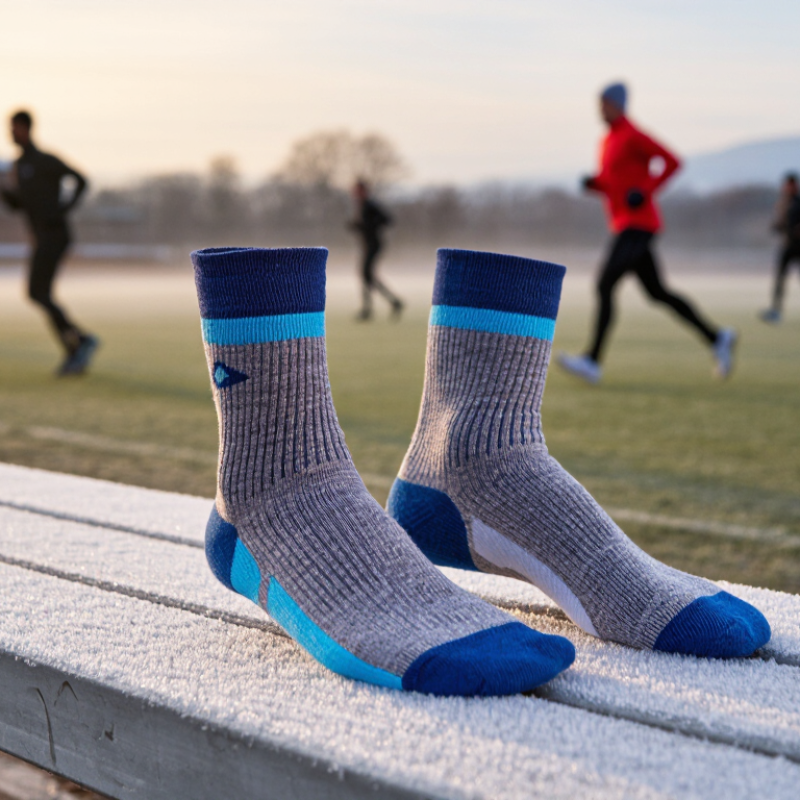
Thermal sports socks are designed to manage warmth and moisture during activity, rather than simply cover the foot. They often combine insulating fibers, such as wool, with synthetic yarns that help move sweat away from the skin. Some also use targeted cushioning around the heel or ball of the foot. The exact construction varies, so “thermal” does not describe one standard design.
Regular socks may use lighter, more uniform fabric and offer less insulation or sport-specific cushioning. Thermal sports socks are often thicker, but thickness alone does not guarantee comfort. A close fit matters. Excess fabric can bunch inside a shoe, creating pressure or blisters, while a sock that is too tight may feel restrictive. Check how the sock fits with your usual footwear.
Warmth has trade-offs. On a cold walk to the trail, insulation can feel welcome; during hard intervals, the same sock may feel too warm. Moisture-wicking fabric can help, but it cannot keep every foot dry. Fiber blend, shoe ventilation, and personal sweat levels all make a difference. More padding is not always better. Choosing a pair means balancing warmth, cushioning, and a secure fit for the conditions.
How Insulating Materials Help Regulate Foot Temperature
Thermal sports socks help manage the small, changing climate inside a shoe. Their fibers and knit structure trap still air, slowing heat loss from the skin when cold air or wind chills the foot. During a hard run, however, insulation alone is not enough. Feet also release heat through sweat, and damp fabric can feel clammy and cold once activity slows.
The American Podiatric Medical Association reports that each foot has about 250,000 sweat glands and may produce up to half a pint of moisture daily.
That is a useful reminder: warmth depends on moisture control, not simply thicker fabric. A sock that moves sweat away from the skin can help feet feel steadier as effort rises and falls. A tight shoe can still crush the fabric and reduce the insulating air it holds. Small details matter.
ASTM F1868 provides a standard method for measuring clothing’s thermal resistance, including materials used in layered apparel. It does not mean every “thermal” sock performs equally; fiber blend, knit density, fit, and shoe ventilation all affect comfort. For athletes, the practical choice is insulation suited to the weather and pace, with enough room for toes to move.
The trade-off is real. Too much warmth can leave feet wet, while too little can make a cold start harder.
How Moisture Control Supports Comfort and Performance
Why Are Thermal Sports Socks Beneficial for Athletes?
How Moisture Control Supports Comfort and Performance
Thermal sports socks help manage the damp, warm environment inside training shoes. When sweat lingers, skin can feel clammy, and repeated rubbing may irritate toes or heels. Fabrics designed to move moisture away from the skin can help socks feel drier, though results depend on fit, fiber blend, and workout conditions. AATCC Test Method 195 evaluates textile liquid-moisture management, including absorption and one-way transport. It offers a useful way to assess fabric performance, but it does not guarantee comfort for every athlete.
Moisture control matters, but it is not a substitute for hydration or heat safety. The National Athletic Trainers’ Association’s 2015 position statement notes that body-mass losses above 2% can impair exercise performance. That figure concerns whole-body dehydration, not sock moisture; the distinction is important.
Small details matter. A sock that stays damp can still rub, especially if it bunches inside a shoe. I have to admit, “moisture-wicking” alone is not enough to judge a pair.
Tips: Choose a snug fit without tight seams, and check that the heel stays in place during movement. After training, change out of wet socks and let shoes dry fully. Test new socks on a short session before wearing them for a long event.
How Cushioning and Fit Reduce Friction During Activity
Thermal sports socks help by managing more than cold. Their cushioning spreads pressure across the heel and forefoot, while a close fit limits fabric movement against the skin. Less sliding means less repetitive shear—the motion that can turn a hot spot into a blister. Fit matters. A sock that bunches under the toes can create a new friction point, even when its padding feels soft.
The Sports Medicine review by Knapik and colleagues (1995) describes friction blisters as damage caused by repeated shear, heat, and moisture. It also reports blister rates of about 69% in one military recruit cohort, showing how common the problem can become during sustained activity. The National Athletic Trainers’ Association position statement on skin conditions in athletes likewise identifies friction and moisture control as practical prevention measures. These findings support a simple choice: use cushioning where your foot bears pressure, but avoid excess bulk that makes the shoe tight. Try socks during a shorter training session first. Warmth alone is not protection. I’d be cautious about claiming any sock prevents blisters; shoe fit, sweat, pace, and distance still matter.
Why Are Thermal Sports Socks Beneficial for Athletes?
How cushioning and fit can help reduce friction during activity
This chart illustrates the Coulomb friction model: friction force = coefficient of friction × normal force. Values use an assumed coefficient of 0.30 and are calculated examples, not measurements from athletes or socks. Cushioning may spread pressure at a hotspot, while a secure fit can limit sock movement; neither thermal properties nor cushioning alone guarantees less friction.
How to Choose Thermal Sports Socks for Different Conditions
Thermal sports socks work best when their warmth matches the conditions, not simply when they feel thick. For dry, cold runs, choose a close-fitting pair with insulating fibers and light cushioning under the heel and forefoot. A snug cuff helps keep the sock in place, but it should not leave deep marks or make toes feel compressed. Fit matters.
For wet trails or snowy walks, look for a fabric blend that moves moisture away from the skin and dries reasonably quickly. Wool blends can retain warmth when damp, while synthetic fibers often dry faster; construction and thickness also matter. Check seams around the toes, since rubbing can become painful after several miles. Try the socks with your usual shoes, because extra bulk may restrict circulation or change the fit.
For intense training or milder weather, a thinner thermal sock may be more comfortable than a heavily padded one. Sweaty feet can feel cold once activity slows. Not always obvious. If your feet overheat during a short test, choose less insulation or a lighter knit. I would not assume the warmest option is the safest choice; temperature, pace, footwear, and personal comfort all affect the decision. A small trial on a familiar route can reveal more than the package description.
Conclusion
Thermal sports socks are designed to keep feet comfortable during activity in cold or changing conditions. Unlike ordinary socks, they often use insulating materials that help retain warmth while allowing excess heat to escape, supporting a more balanced foot temperature. Their moisture-managing fabrics can move sweat away from the skin, helping feet feel drier and reducing discomfort during long workouts.
Other benefits come from thoughtful cushioning and a secure fit. Padding in high-pressure areas can soften impact, while a close-fitting design helps limit bunching and friction that may cause irritation. What are the benefits of thermal sports socks depends partly on the activity and weather: lightweight options may suit cool conditions, while thicker or more insulating pairs can be useful in colder environments. Choosing the right fabric, cushion level, and fit can help athletes stay comfortable and focused.

 Traura Sports